
Why Proper Diagnosis Matters in Hair Loss – and How to Get It
Hair loss can feel overwhelming. One day you notice extra strands in the shower drain or on your pillow, and suddenly your mind races: Is this normal shedding, or am I losing my hair? Before reaching for supplements or miracle shampoos, it’s important to understand one crucial step: getting the right diagnosis.
2 min read
Why diagnosis matters
Hair loss isn’t one single condition. It’s a symptom – and many different things can cause it. Stress, hormones, genetics, nutrient deficiencies, autoimmune issues, and even hairstyles can all play a role. Treating hair loss without knowing the underlying reason is like trying to fix a leaky roof without checking where the hole is. You might spend time and money on solutions that don’t actually work for you.
Different types of hair loss require different treatment approaches. What works for androgenetic alopecia may not be effective for alopecia areata, and using the wrong treatment can sometimes make the condition worse or delay appropriate care.
Your First Step: Don't Self-Diagnose
While this guide is a great starting point, it’s not a substitute for professional medical advice. The most important move you can make is to consult a dermatologist or a doctor. They can accurately diagnose your type of hair loss and recommend a targeted treatment plan.
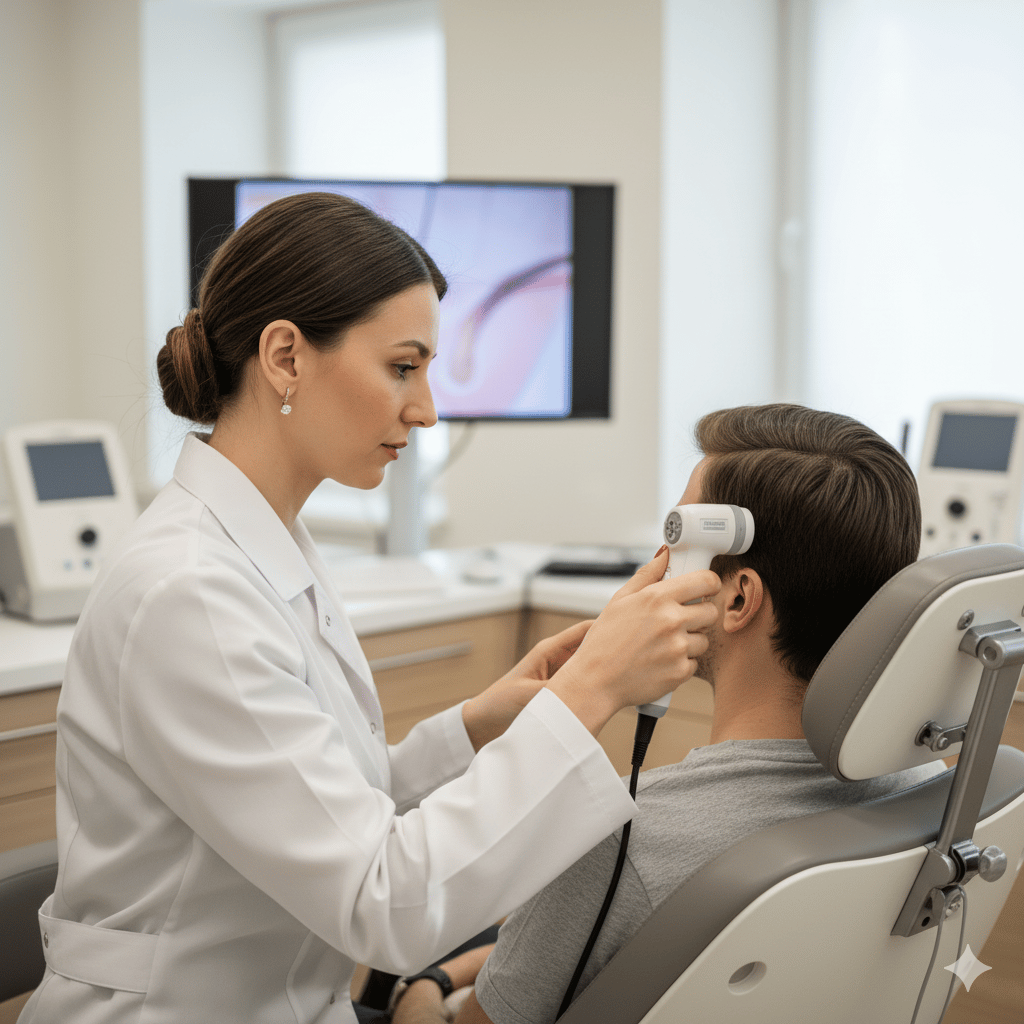
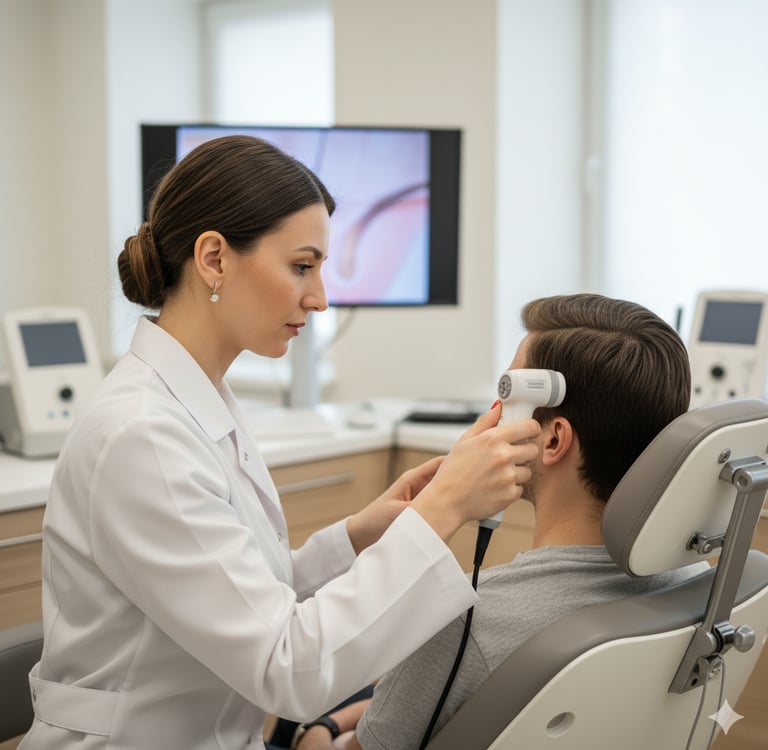
What to expect during a medical consultation
If you’re concerned about hair loss, start by visiting a dermatologist or a trichologist (a hair and scalp specialist). Here’s what they might do:
Ask about your medical history, family history, and lifestyle.
Examine your scalp and hair pattern
Order blood tests to check for nutrient or hormonal imbalances.
Sometimes perform a scalp biopsy for definitive diagnosis
Recommend appropriate treatment options
A proper diagnosis helps you:
Identify the real cause of the shedding.
Choose treatments that actually address your type of hair loss.
Avoid wasting money on ineffective products.
Get peace of mind, knowing what’s happening to your body.
Common types of hair loss – and how they’re diagnosed
1. Androgenetic Alopecia
(Male or Female Pattern Hair Loss)
What it looks like: Thinning at the crown, a widening part, or receding hairline.
How it’s diagnosed: A dermatologist usually recognizes it through a scalp examination and medical history. Sometimes, they use a dermatoscope to look at hair follicles more closely.
2. Telogen Effluvium
What it looks like: Sudden, diffuse shedding across the scalp, often after stress, illness, or hormonal changes.
How it’s diagnosed: Doctors ask about recent life events, medications, and stress. Blood tests may be ordered to check for iron, thyroid, or vitamin deficiencies.
3. Alopecia Areata
What it looks like: Patchy bald spots that can appear overnight.
How it’s diagnosed: A dermatologist can usually confirm it with a visual exam. In rare cases, a scalp biopsy is done to rule out other conditions.
4. Traction Alopecia
What it looks like: Thinning or bald patches along the hairline, often from tight hairstyles.
How it’s diagnosed: Doctors consider hairstyle history and look for broken or miniaturized hairs along the affected areas.
5. Anagen Effluvium
What it looks like: Rapid, widespread hair loss, often including body hair.
How it’s diagnosed: Usually confirmed through a scalp biopsy, since early treatment is crucial to stop progression.
Takeaway
Hair loss is common – but not all hair loss is the same. By getting a proper diagnosis, you give yourself the best chance at finding a treatment plan that actually works. Instead of guessing, let an expert guide you. Your hair, your confidence, and your wallet will thank you.
Remember: The journey to addressing hair loss starts with knowledge. By understanding the root cause, you can choose a solution that actually works.