
Telogen Effluvium: The Temporary Hair Loss That Feels Permanent
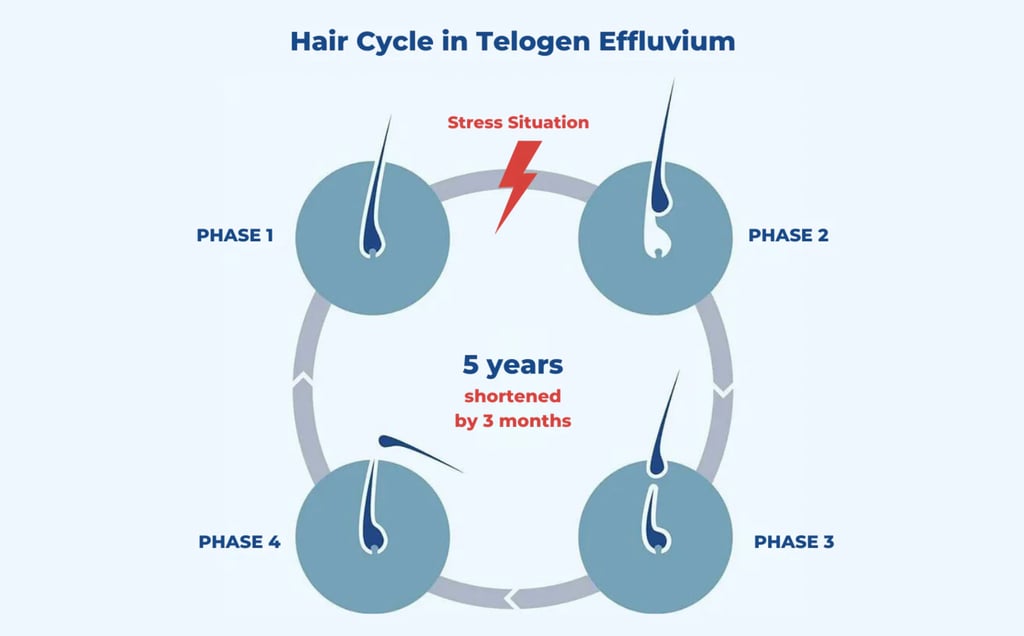
Telogen effluvium is a form of temporary hair loss that occurs when a large number of hair follicles are pushed into the resting (telogen) phase of the hair growth cycle simultaneously. Instead of the normal 10-15% of your hair being in this resting phase, suddenly 30% or more of your follicles shut down at once.
5 min read
This type of hair loss can be absolutely terrifying when you're going through it. One day your hair seems fine, and then suddenly you're finding clumps in the shower, on your pillow, and every time you run your fingers through your hair. The good news? Understanding what's happening can help you get through it and, more importantly, help your hair recover.
What Is Telogen Effluvium?
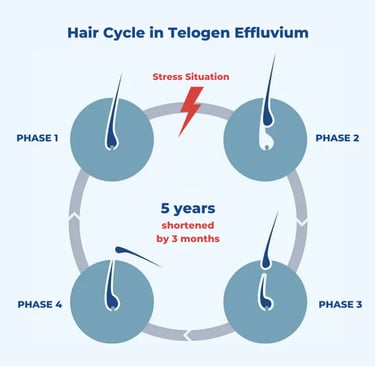
Telogen effluvium is a form of temporary hair loss that occurs when a large number of hair follicles are pushed into the resting (telogen) phase of the hair growth cycle simultaneously. Instead of the normal 10-15% of your hair being in this resting phase, suddenly 30% or more of your follicles shut down at once.
Remember how hair grows in cycles? Normally, most of your hair is in the active growth phase (anagen), with only a small percentage resting. When something shocks your system, many growing hairs get the message to "pause" and enter the resting phase. About 2-4 months later, all those resting hairs shed at once, creating the dramatic hair loss that characterizes telogen effluvium.
The key thing to understand is that this isn't permanent damage to your hair follicles—they're just taking an unexpected break.
Types of Telogen Effluvium
Acute Telogen Effluvium
This is the most common type, lasting less than six months. It's usually triggered by a specific stressful event and resolves on its own once the trigger is removed and enough time has passed.
Chronic Telogen Effluvium
Less common but more persistent, this form lasts longer than six months and can continue for years. It's often related to ongoing health issues, nutritional deficiencies, or chronic stress.
What Causes Telogen Effluvium?
The triggers for telogen effluvium are surprisingly varied, but they all have one thing in common: they represent a significant shock or stress to your body's systems.
Physical Stress and Trauma
Major surgery or illness: Any significant physical trauma can trigger telogen effluvium. This includes major surgeries, serious infections, high fevers, or chronic illnesses.
Rapid weight loss: Crash diets, eating disorders, or significant weight loss (whether intentional or not) can shock your system into shedding hair.
Childbirth: Postpartum hair loss is actually a form of telogen effluvium, triggered by the dramatic hormonal changes after delivery.
Severe infections: COVID-19 has become a well-recognized trigger, but any serious infection can cause this type of hair loss.
Nutritional Deficiencies
Iron deficiency: This is one of the most common nutritional causes, especially in women with heavy menstrual periods.
Protein deficiency: Since hair is made of protein, severe protein restriction can force follicles into resting mode.
Zinc deficiency: Often overlooked, zinc plays a crucial role in hair growth and cellular repair.
B-vitamin deficiencies: Particularly B12, biotin, and folate deficiencies can trigger diffuse hair loss.
Vitamin D deficiency: Increasingly recognized as a contributor to various types of hair loss.
Hormonal Changes
Thyroid disorders: Both hyperthyroidism and hypothyroidism can cause telogen effluvium.
PCOS: Polycystic ovary syndrome can trigger this type of hair loss through hormonal imbalances.
Menopause: The hormonal shifts during perimenopause and menopause can cause temporary diffuse shedding.
Medications
Many medications can trigger telogen effluvium, including:
Blood thinners (heparin, warfarin)
Beta-blockers for heart conditions
Antidepressants (particularly SSRIs)
Retinoids for acne treatment
Anti-seizure medications
Some antibiotics
Chemotherapy drugs (though this is technically a different mechanism)
Emotional and Psychological Stress
Chronic stress: Prolonged periods of high stress can push hair follicles into the resting phase.
Trauma or grief: Significant life events like divorce, job loss, or death of a loved one can trigger hair loss months later.
Mental health conditions: Depression and anxiety can contribute to telogen effluvium, especially when combined with poor nutrition or sleep.
Symptoms and What to Expect
The Timeline:
Understanding the timeline of telogen effluvium is crucial for managing anxiety about the condition:
Months 1-2 after trigger: Usually no noticeable hair loss yet Months 2-4: Dramatic increase in shedding begins Months 4-6: Peak shedding period Months 6-12: Gradual improvement and recovery
What You'll Notice
Diffuse thinning: Unlike pattern baldness, telogen effluvium affects hair all over your head uniformly.
Massive shedding: You might lose 300-1000 hairs per day instead of the normal 50-100.
No bald patches: The hair loss is usually even across your entire scalp.
Shorter hairs: New growth might appear shorter and thinner initially.
Scalp sensitivity: Some people experience scalp tenderness or sensitivity.
The Pull Test
Dermatologists often perform a simple pull test: gently tugging on about 60 hairs in different areas of the scalp. In telogen effluvium, more than 6-10 hairs typically come out easily.
Diagnosis: Ruling Out Other Conditions
Since telogen effluvium can look similar to other types of hair loss, proper diagnosis is important:
Medical History
Your doctor will ask about recent stressful events, illnesses, medications, and dietary changes from 2-6 months before the hair loss began.
Blood Tests
Common tests include:
Complete blood count (to check for anemia)
Iron studies (ferritin, iron, TIBC)
Thyroid function tests (TSH, T3, T4)
Vitamin D levels
B12 and folate levels
Zinc levels
Scalp Examination
Your doctor will examine your scalp for signs of inflammation, scaling, or pattern-specific hair loss that might suggest other conditions.
Trichoscopy
Some doctors use a specialized magnifying device to examine hair and scalp more closely, looking for specific signs of telogen effluvium.
Treatment and Recovery
The most important thing to understand about telogen effluvium is that it's largely a waiting game—but there are things you can do to support recovery.
Address the Underlying Cause
Correct nutritional deficiencies: This is often the most important step. Iron supplementation, if you're deficient, can be particularly helpful.
Manage stress: While easier said than done, stress management techniques like meditation, exercise, or therapy can help.
Review medications: Work with your doctor to see if any medications might be contributing to the hair loss.
Treat underlying health conditions: Addressing thyroid problems, hormonal imbalances, or other health issues is crucial.
Nutritional Support
Protein intake: Ensure adequate protein consumption (about 1.2-1.6g per kg of body weight daily).
Iron: If deficient, iron supplementation can help, but only supplement if blood tests confirm deficiency.
Zinc: 8-11mg daily through food or supplements.
B-complex vitamins: Particularly important if you have dietary restrictions or absorption issues.
Vitamin D: Maintain adequate levels through sun exposure, food, or supplements.
Hair Care During Recovery
Be gentle: Use a wide-tooth comb, avoid tight hairstyles, and minimize heat styling.
Choose mild products: Use sulfate-free shampoos and gentle conditioners.
Avoid over-washing: Washing 2-3 times per week is usually sufficient and reduces mechanical hair loss.
Protect your scalp: Use sunscreen on exposed scalp areas and consider protective hairstyles.
Medical Treatments
Minoxidil: While not specifically approved for telogen effluvium, some doctors prescribe it to help speed recovery.
Low-level laser therapy: May help stimulate follicles back into the growth phase.
Platelet-rich plasma (PRP): Some practitioners use PRP injections to potentially accelerate recovery.
Natural Recovery Timeline
Most people with acute telogen effluvium will see:
Months 1-3: Continued shedding but may begin to slow Months 3-6: Shedding gradually decreases Months 6-12: New growth becomes more visible Months 12-18: Hair density returns to near-normal levels
Remember, hair only grows about half an inch per month, so even when new growth starts, it takes time to see significant length and density improvement.
Remember that this is temporary for most people. Your hair follicles are still there, just resting. With time and proper care, they will likely return to normal function.
Hope and Recovery
The most encouraging thing about telogen effluvium is that it's usually completely reversible. Unlike androgenic alopecia, where hair loss is progressive and permanent without treatment, telogen effluvium hair typically grows back to its original density.
Focus on addressing any underlying triggers, supporting your overall health, and being patient with the process. Your hair has been through a shock, and like any healing process, recovery takes time.
Remember: If you suspect telogen effluvium, consult with a healthcare provider or dermatologist for proper diagnosis and treatment guidance. This information is educational and shouldn't replace professional medical advice.