
Does Minoxidil Actually Work for Hair Loss? My Deep Dive into the Research
After diving deep into the clinical studies and talking to people who've used it, I wanted to share what I learned about minoxidil's effectiveness for androgenic alopecia.
5 min read
First, Let's Talk About Why We Lose Hair
Before we get into whether minoxidil works, it helps to understand what we're actually fighting against. Androgenic alopecia – or what most of us just call "going bald" – is ridiculously common. We're talking about the type of hair loss that runs in families, affects about 50% of people over 50, and can start as early as your twenties.
It's mostly about genetics and hormones. Your hair follicles are basically programmed to be sensitive to a hormone called DHT (dihydrotestosterone). Over time, DHT makes your hair follicles shrink, producing thinner and shorter hairs until they eventually give up entirely.
For guys, this usually means the classic receding hairline and bald spot on top. For women, it's more about overall thinning across the scalp. Either way, it's not fun to watch happen.
So What Exactly Is Minoxidil?
Here's where things get interesting. Minoxidil wasn't even created for hair loss – it was a blood pressure medication back in the 1970s. But doctors noticed something weird: patients taking it were growing hair in unexpected places. Talk about a happy accident!
Fast forward to today, and you can pick up minoxidil at pretty much any pharmacy without
a prescription. It comes in two main strengths (2% and 5%) and different forms – liquid solutions, foams, and even oral tablets (though most people use the topical formula for hair loss).
How Does Minoxidil Actually Work?
Honestly? Scientists aren't 100% sure, which I found pretty surprising given how long it's been around. But here's what they think is happening:
Better Blood Flow: Minoxidil opens up blood vessels around your hair follicles. Think of it like giving your hair roots a better supply line for nutrients and oxygen.
Longer Growth Cycles: Your hair goes through growth and rest phases. Minoxidil seems to keep hair in the growing phase longer, so you get more length and thickness before it falls out naturally.
Wake Up Sleepy Follicles: Those tiny, barely-there hairs you might have? Minoxidil can sometimes pump them back up to normal size.
Okay, But Does It Actually Work? Here's What the Studies Show
This is where I got really nerdy and dug into the research. The short answer? Yes, minoxidil works for most people, but "works" needs some context.
For Men
The studies on guys are pretty consistent:
About 6 out of 10 men see some kind of regrowth with the 5% solution
Around 4 out of 10 get what researchers call "moderate to dense" regrowth (which sounds pretty good to me)
Hair counts typically improve by 15-30% compared to doing nothing
Here's the catch: it works way better on the crown (top of your head) than the hairline
For Women
Women actually seem to respond even better:
Studies show 60-80% of women get some regrowth
Women tend to see improvement across their entire scalp, not just specific spots
The 5% strength works better than 2% for women too (more on that below)
The Reality Check: Timeline
You might see something after 3-4 months if you're lucky
Peak results happen around 12-18 months
Some people actually lose more hair in the first few weeks (apparently this is normal and means it's working)
2% vs 5%: Skip the Weaker One
This one's easy – go with 5% if you can handle it. The research is crystal clear that 5% minoxidil beats 2% by a significant margin (we're talking 45% better results in some studies).
For years, they told women to stick with 2% because of concerns about growing unwanted facial hair. But newer studies show women can use 5% just fine with similar side effect rates.
Let's Get Real About What to Expect
I've seen way too many before/after photos that set completely unrealistic expectations. Here's the truth:
What minoxidil can actually do:
Stop your hair loss from getting worse (this alone is huge)
Thicken up those wispy, miniaturized hairs you still have
Give you better overall coverage so your scalp doesn't show through as much
Give you some actual new growth
What it definitely cannot do:
Turn a completely bald scalp back into a full head of hair
Work miracles on areas that have been smooth and hairless for years
Give you the same results as your friend (genetics are weird like that)
Keep working if you stop using it
That last point is crucial – minoxidil is a lifelong commitment. Stop using it, and any gains you made will disappear within a few months.
Side Effects (The Stuff Nobody Wants to Talk About)
Most people tolerate minoxidil pretty well, but let's be real about what might happen:
Scalp irritation – itching, dryness, flaking (only the liquid version)
That scary initial hair shedding I mentioned (it's temporary, last for 2-3 weeks)
Unwanted hair growth on your face/neck (only the liquid version)
Contact dermatitis if you're sensitive to the ingredients
If you get any of the scary symptoms, stop using it and call your doctor. Most people just deal with some scalp irritation, and switching from the liquid to foam version helps with that.
How to Actually Use It (And Not Waste Your Money)
After talking to dermatologists and reading way too many forum posts, here's what actually matters:
Be Religiously Consistent: Use it every day. Missing doses regularly will tank your results.
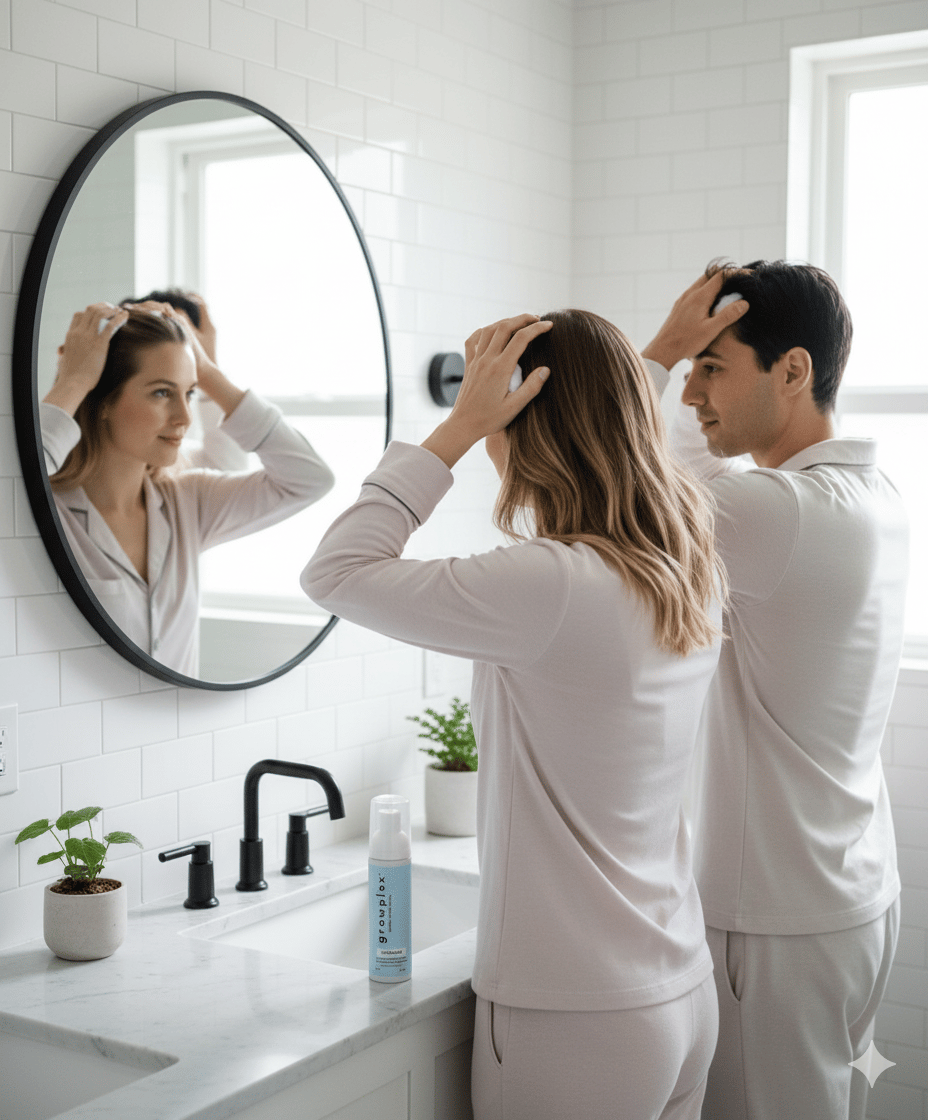
Less is More: You don't need to drench your scalp. A half capful of foam is plenty. More won't work better and will just irritate your skin.
Apply to Dry Scalp: Wet hair dilutes the minoxidil and makes it less effective. Wait until your hair is completely dry after showering.
Don't Wash It Off Too Soon: Let it sit for at least 4 hours before shampooing. Overnight is even better.
Start Early: The earlier you catch hair loss, the better minoxidil works. If you're reading this and noticing thinning, don't wait six months to start.
Consider Combining Treatments: Many people use minoxidil with finasteride (for men) or address things like iron deficiency, stress, or harsh styling practices.
Should You Try Minoxidil?
Here's my take after all this research:
You're probably a good candidate if:
You're dealing with early to moderate hair loss (still have some hair to work with)
You want something you can buy without dealing with doctors and prescriptions
You can't or don't want to take oral medications like finasteride
You're okay with a once-daily routine for the foreseeable future
My Final Thoughts
After diving deep into all the research, here's what I think: minoxidil isn't a miracle cure, but it's probably the best first-line treatment we have for hair loss. The science backs it up, it's relatively safe, and you can get it without jumping through medical hoops.
Will it give you back the hair you had at 18? Probably not. Will it help you keep more of what you have and maybe thicken things up? For most people, yes.
The key is going into it with realistic expectations and understanding that this is a marathon, not a sprint. If you can commit to using it consistently for at least a year, and you're okay with the idea
of using it indefinitely, it's worth trying.
Just remember – the sooner you start, the better your chances. Hair follicles are easier to save than to resurrect.
In my upcoming post, I’ll talk about which Minoxidil I’m using and what made me choose it.
Quick disclaimer: I'm not a doctor, just someone who's done a lot of research on this topic. If you
have specific health concerns or questions about whether minoxidil is right for you, definitely talk
to a dermatologist or your regular doctor first.