
Anagen Effluvium: When Growing Hair Stops Growing
Anagen effluvium is perhaps one of the most dramatic and distressing forms of hair loss you can experience. Unlike other types of hair loss that develop gradually over months or years, anagen effluvium can cause rapid, severe hair loss that affects up to 80-90% of your hair within just days or weeks.
6 min read
This condition occurs when something toxic or damaging interrupts
the active growth phase of your hair cycle, causing growing hairs to
break off or fall out suddenly. While the experience can be devastating,
understanding what's happening and why can help you navigate this
challenging time and prepare for recovery.
What Is Anagen
Effluvium?
To understand anagen effluvium, you need to remember that most of
your hair (about 85-90%) is normally in the anagen or active growth
phase at any given time. During this phase, hair follicle cells are dividing
rapidly to create new hair growth—in fact, they're some of the
fastest-dividing cells in your entire body.
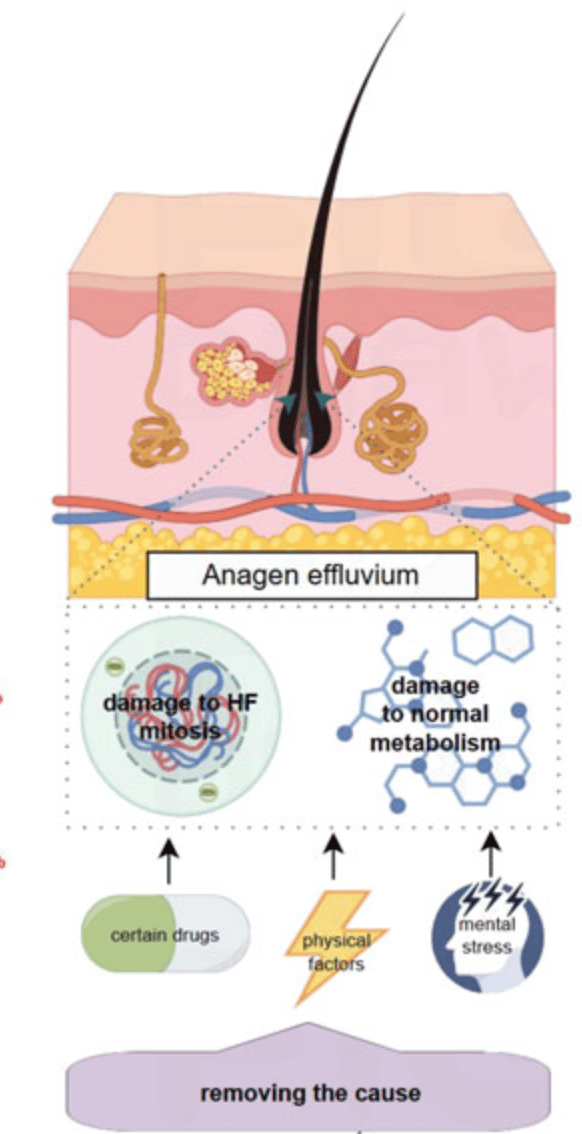
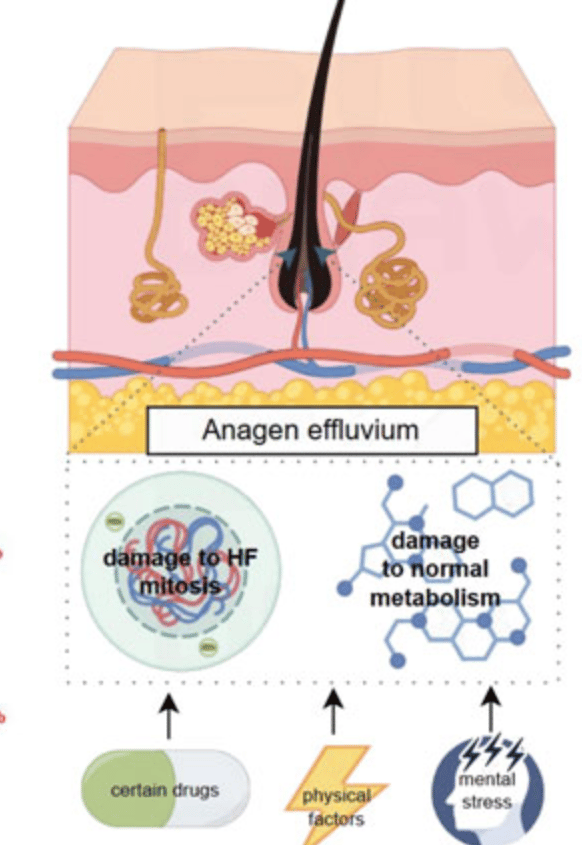
Anagen effluvium occurs when something damages or disrupts these rapidly dividing cells, causing the hair shaft to become weak and brittle, or stopping hair production altogether. The result is sudden, severe hair loss that typically begins within days to weeks of exposure to the triggering factor.
Unlike telogen effluvium, where hairs complete their growth cycle and then shed, anagen effluvium interrupts hairs while they're actively growing. This is why the hair loss is usually more severe and happens much more quickly.
Main Causes of Anagen Effluvium
Chemotherapy - The Most Common Cause
Chemotherapy is by far the most frequent cause of anagen effluvium. Cancer-fighting drugs are designed to target rapidly dividing cells—which is exactly what cancer cells are. Unfortunately, hair follicle cells are also rapidly dividing, making them collateral damage in cancer treatment.
How chemotherapy affects hair:
Different drugs cause varying degrees of hair loss
Some affect only scalp hair, others affect all body hair
Hair loss usually begins 1-3 weeks after starting treatment
The severity depends on the type, dose, and duration of treatment
Common chemotherapy drugs that cause hair loss:
Doxorubicin (Adriamycin) - causes complete hair loss in most patients
Cyclophosphamide (Cytoxan) - moderate to severe hair loss
Paclitaxel (Taxol) - severe hair loss including eyebrows and eyelashes
Carboplatin - variable hair loss, often less severe than other drugs
Radiation Therapy
Radiation therapy causes hair loss only in the area being treated, but within that area, the loss can be complete and sometimes permanent.
Characteristics of radiation-induced hair loss:
Only affects hair in the radiation field
Hair loss usually begins 2-3 weeks after treatment starts
May be temporary or permanent depending on the dose
Higher doses (above 30 Gray) often cause permanent loss
Lower doses usually allow for regrowth
Toxic Exposures
Several toxic substances can cause anagen effluvium:
Heavy metals:
Lead poisoning - can cause diffuse hair loss along with other symptoms
Mercury exposure - may cause hair loss and neurological symptoms
Arsenic poisoning - can cause hair loss and distinctive nail changes
Chemical exposure:
Industrial chemicals in occupational settings
Severe poisoning from various toxic substances
Accidental ingestion of harmful chemicals
Severe Protein-Energy Malnutrition
In cases of extreme malnutrition, the body may shut down non-essential functions like hair growth to preserve energy for vital organs.
Conditions that may cause this:
Severe eating disorders (anorexia nervosa)
Kwashiorkor (protein deficiency malnutrition)
Marasmus (severe caloric restriction)
Prolonged starvation
Certain Medications
While less common than chemotherapy, some other medications can cause anagen effluvium:
High-dose medications:
Some antibiotics in very high doses
Certain antifungal medications
Some psychiatric medications
Colchicine (for gout) in toxic doses
Autoimmune Conditions (Rare)
In very rare cases, severe autoimmune reactions can cause anagen effluvium, though this is much more commonly associated with alopecia areata.
Signs and Symptoms
Timeline and Pattern
Onset: Hair loss typically begins 1-4 weeks after exposure to the triggering factor Speed: Loss can be very rapid, with significant thinning visible within days Extent: Can affect 80-90% of scalp hair, and often includes eyebrows, eyelashes, and body hair Pattern: Usually diffuse (all over) rather than patchy
What You'll Notice
Massive shedding: Much more dramatic than normal daily hair loss Hair breakage: Hair may break off rather than fall out from the root Weakened hair: Remaining hair may feel brittle and fragile Complete loss: In severe cases, you may lose almost all your hair Nail changes: Some people also experience nail problems
Physical Appearance of Lost Hairs
Unlike telogen effluvium where shed hairs have a white bulb at the root, anagen effluvium hairs may:
Have a pointed, tapered end (if broken off)
Show a damaged or fractured hair shaft
Lack the normal root bulb structure
Diagnosis
Diagnosing anagen effluvium is usually straightforward when there's a clear triggering factor like chemotherapy, but sometimes requires more investigation.
Medical History
The most important factor is timing—recent exposure to chemotherapy, radiation, toxins, or severe illness that correlates with the onset of hair loss.
Physical Examination
Doctors will examine:
The pattern and extent of hair loss
The condition of remaining hair
Signs of underlying illness or toxicity
Nail changes or other symptoms
Hair Analysis
Microscopic examination: Looking at shed hairs under a microscope can show:
Fractured or damaged hair shafts
Abnormal root structures
Signs of toxicity or damage
Trichogram: A specialized test where hairs are plucked and examined to determine what percentage are in each growth phase
Blood Tests
Depending on suspected causes:
Heavy metal levels if toxic exposure is suspected
Nutritional markers in cases of malnutrition
General health markers to assess overall condition
Biopsy (Rare)
Only needed in unusual cases where the cause isn't clear or other conditions are suspected.
Treatment and Management
Addressing the Underlying Cause
Chemotherapy patients:
Hair loss is usually unavoidable during treatment
Focus shifts to managing the experience and preparing for regrowth
Some cooling caps may reduce hair loss in certain cases
Toxic exposure:
Remove or minimize exposure to the toxic substance
Supportive care to help the body eliminate toxins
Monitor for other signs of toxicity
Nutritional deficiency:
Correct malnutrition with proper diet and supplements
Address underlying eating disorders or medical conditions
Monitor for other health complications
Scalp Care During Hair Loss
Gentle cleansing: Use mild, fragrance-free shampoos Moisturizing: Keep the scalp moisturized to prevent dryness and irritation Sun protection: Protect exposed scalp from UV damage Avoid trauma: Don't use harsh brushing, tight hairstyles, or chemical treatments
Cosmetic Management
Wigs and hairpieces: Can provide immediate coverage and boost confidence Scarves and hats: Comfortable options for daily wear Makeup techniques: For eyebrow and eyelash loss Scalp micropigmentation: May be an option for some people
Supportive Care
Emotional support: Counseling or support groups can be very helpful Nutritional support: Ensure adequate nutrition to support recovery General health: Maintain overall health to optimize regrowth potential
Recovery and Regrowth
Timeline for Recovery
End of exposure: Recovery can't begin until the damaging factor is removed or treatment ends Early regrowth: New hair growth typically begins 1-3 months after the trigger stops Visible improvement: Noticeable hair coverage usually takes 3-6 months Full recovery: Complete regrowth may take 6-12 months or longer
What to Expect During Regrowth
Texture changes: New hair may initially be different in texture, color, or curl pattern Gradual improvement: Hair density increases slowly over many months Variable recovery: Some areas may regrow faster than others Possible permanent changes: In some cases, hair may never fully return to its original state
Factors Affecting Recovery
Age: Younger people often recover more completely
Overall health: Better general health supports better recovery
Severity of damage: More severe initial damage may mean slower recovery
Duration of exposure: Longer exposure to damaging factors may impact recovery
Individual variation: People respond differently to the same triggers
Complications and Long-term Effects
Permanent Hair Loss
While most anagen effluvium is reversible, some cases can result in permanent hair loss:
High-dose radiation therapy
Severe toxic exposures
Prolonged or repeated damage to follicles
Incomplete Recovery
Some people may experience:
Thinner hair density than before
Changes in hair texture or color
Patchy regrowth patterns
Slower growth rate
Psychological Impact
The sudden, severe nature of anagen effluvium can cause:
Significant emotional distress
Body image issues
Social anxiety
Depression
Preventing Anagen Effluvium
Occupational Safety
Follow safety protocols when working with toxic chemicals
Use proper protective equipment
Regular health monitoring in high-risk jobs
Medical Treatments
Discuss hair loss risks with healthcare providers
Consider scalp cooling during chemotherapy if appropriate
Explore alternative treatments when possible
Nutritional Health
Maintain adequate nutrition
Seek help for eating disorders
Monitor nutritional status during illness
Special Considerations
Chemotherapy Patients
Scalp cooling: Cold caps or cooling systems may reduce hair loss for some chemotherapy drugs, though they're not suitable for all cancer types or treatments.
Timing: Plan for wigs or hairpieces before hair loss begins if desired.
Support: Connect with cancer support groups where others understand the experience.
Children
Children with anagen effluvium need special consideration:
Age-appropriate explanations of what's happening
School support and accommodations
Extra emotional support during treatment
Child-friendly cosmetic options
Occupational Exposure
Workers in certain industries should be aware of:
Proper safety protocols
Regular health monitoring
Early signs of toxic exposure
Importance of reporting symptoms
When to Seek Medical Care
See a healthcare provider immediately if you experience:
Sudden, severe hair loss with no known cause
Hair loss accompanied by other concerning symptoms
Signs of toxic exposure (nausea, neurological symptoms, etc.)
Severe malnutrition or eating disorder symptoms
Follow up with healthcare providers if:
Hair loss is more severe than expected
Recovery isn't progressing as anticipated
You're experiencing significant emotional distress
Other health problems develop
Hope and Support
Anagen effluvium can be one of the most challenging types of hair loss to experience because of its sudden onset and severity. However, it's important to remember that in most cases, this condition is temporary and hair will regrow once the triggering factor is removed.
The experience of losing most or all of your hair can be traumatic, but you're not alone. Many people have walked this path before you and found ways to cope, adapt, and eventually recover. Support groups, counseling, and connecting with others who understand can make a significant difference in your journey.
Focus on your overall health, be patient with the recovery process, and don't hesitate to seek support when you need it. Your hair follicles are likely still intact and capable of producing new hair—they just need time to heal and recover.
Looking Forward
Research continues into ways to protect hair follicles during necessary medical treatments and to speed recovery after anagen effluvium. New understanding of hair follicle biology and stem cell research offers hope for better treatments in the future.
For now, the best approach is supporting your body's natural healing processes, maintaining good overall health, and having patience with the recovery timeline. While the experience is undoubtedly difficult, recovery is possible for most people with anagen effluvium.
If you're experiencing sudden, severe hair loss, consult with a healthcare provider immediately for proper diagnosis and treatment. This information is educational and shouldn't replace professional medical advice.